

If you're hauling a trailer that can approach 50,000 pounds, you are well beyond the requirements of the average towing setup. You need a truck built for the job, a trailer designed for the load, and a 50k 5th wheel hitch capable of handling the weight. At these levels, every component has to work together within their individual ratings.
So, what truck can tow 50,000 lbs? What makes a 50,000 lb 5th wheel hitch different from a 34K hitch? And when should you choose a 5th wheel over a gooseneck? Let's break down what serious haulers need to know before building a heavy-duty towing setup.
What Does a "50K" 5th Wheel Hitch Actually Mean?
The "50K" designation refers to the hitch's Gross Trailer Weight (GTW) rating. In simple terms, it means the hitch is engineered and rated for a trailer with a gross weight of up to 50,000 pounds, assuming the rest of the towing system is appropriately rated.
That number is different from the hitch's maximum vertical or pin load, and this distinction is important because the trailer's total weight and the amount of that weight carried by the truck through the kingpin are two separate measurements. A 50,000 lb trailer does not put all 50,000 pounds directly onto the hitch. Instead, a portion of the trailer's weight is carried through the kingpin while the trailer axles support the rest.
When shopping for a heavy duty 5th wheel hitch, look at both specifications rather than assuming the GTW number tells you everything you need to know.
Just as importantly, the hitch rating is only one part of the equation. A 50K hitch cannot increase your truck's towing capacity. If the truck, trailer connection, mounting hardware, kingpin, axles, tires, or another component has a lower rating, that lower rating becomes the practical limit. Think of the entire towing system as a chain: the system is only as strong as its lowest-rated link.
For professional haulers, there can also be licensing, registration, insurance, equipment, and state or federal commercial requirements that come into play as weights increase. Those rules vary depending on the vehicle, load, operating area, and other factors, so always verify the requirements that apply to your specific operation with your state and applicable transportation authorities.
Recommended products
-
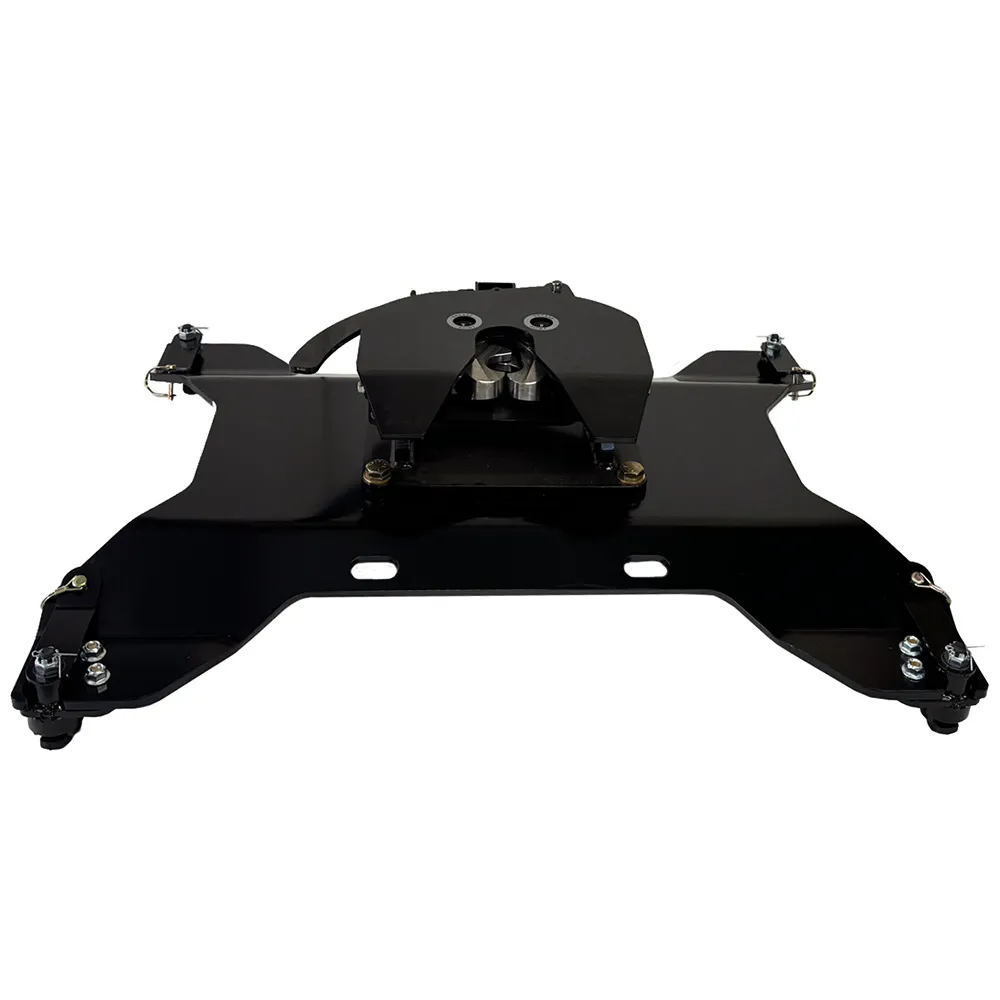
50K EZ Elite OEM Kit
Price range: $1,750.00 through $2,050.00 -
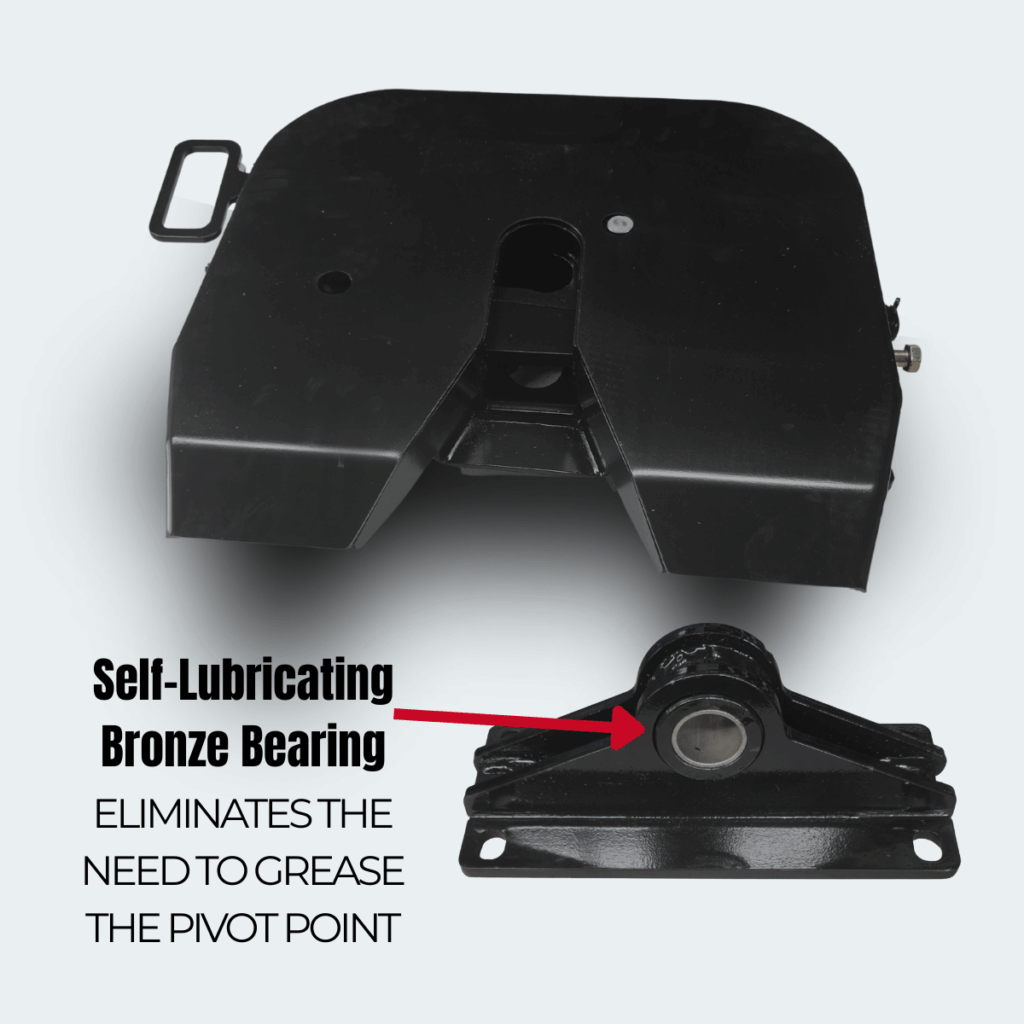
50K Haulin’ Head Unit
$1,295.00 -
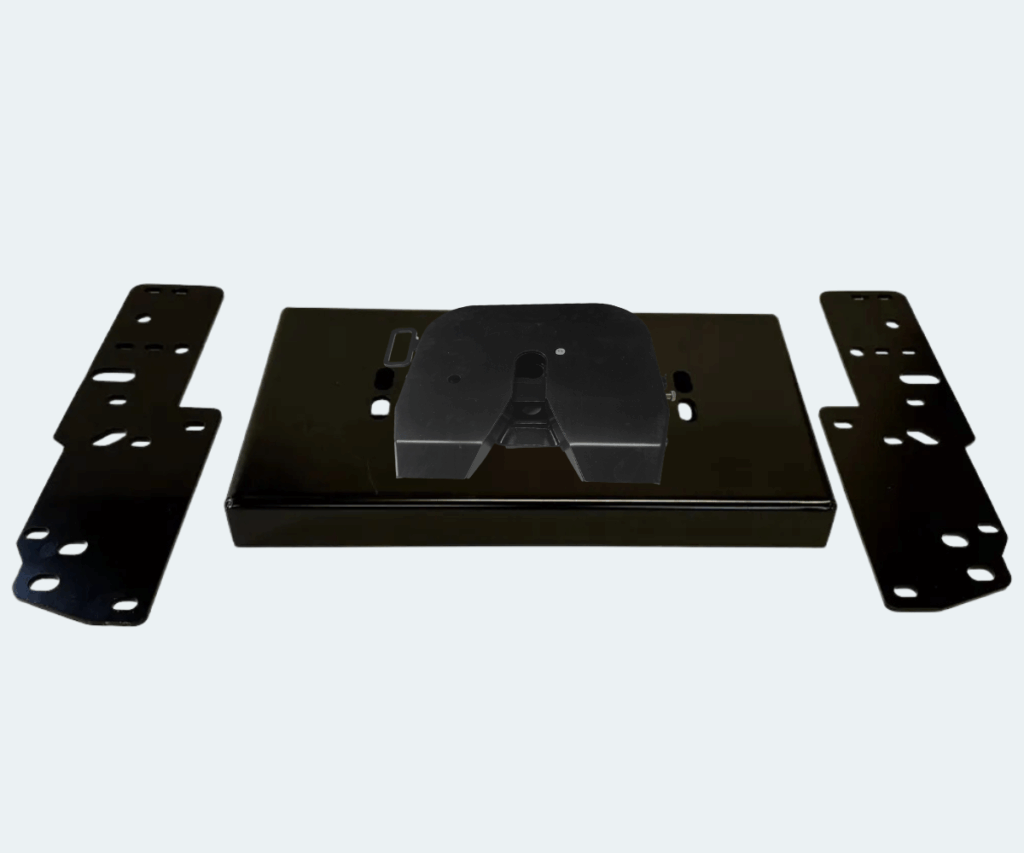
50K Single Pivot Bolt on Kit
$1,750.00
What Truck Do You Need to Tow 50,000 lbs?
If you're asking what truck can tow 50,000 lbs, the first thing to understand is that this is generally not a job for a conventional 3/4-ton or 1-ton pickup.
Even heavy-duty pickups have limits imposed by their Gross Vehicle Weight Rating (GVWR), Gross Combined Weight Rating (GCWR), rear axle rating, payload capacity, tires, brakes, and other components. A trailer weighing 50,000 pounds can quickly push a conventional pickup beyond one or more of those limits.
At this level, you're typically looking at commercial-grade cab-and-chassis or medium-duty configurations, with the exact truck depending on the loaded trailer weight and the manufacturer's ratings for that specific configuration. Trucks in the Ford F-450/F-550, Ram 4500/5500, and Chevrolet/GMC 4500/5500 classes may be part of a heavy-hauling conversation, but you cannot assume that any truck in one of these classes is automatically rated to tow 50,000 pounds.
The actual numbers for the specific truck are what matter.
Truck Ratings To Check
Before choosing a hitch, determine the loaded weight of the trailer and then compare it against the truck's published ratings. Pay particular attention to:
- Gross Vehicle Weight Rating (GVWR): The maximum allowable weight of the truck itself, including occupants, fuel, equipment, hitch, and the portion of the trailer weight carried by the truck.
- Gross Combined Weight Rating (GCWR): The maximum allowable combined weight of the truck and trailer. This is especially important when you're talking about extremely heavy trailers.
- Rear Axle Weight Rating (RAWR): The maximum weight the rear axle is designed to carry. Because a 5th wheel transfers significant weight through the kingpin, rear axle capacity is critical.
- Payload: The amount of weight the truck can carry. Remember that payload isn't just cargo in the bed. The kingpin load, hitch hardware, passengers, tools, fuel, and other equipment all count.
For example, imagine a trailer has a 50,000 lb loaded weight. You can't simply find a hitch rated for 50,000 pounds and call the setup complete. You need a truck and trailer combination capable of legally and safely handling the actual combined weight and the vertical load transferred to the truck.
Choose the truck and hitch around the load—not the other way around.
34K vs. 50K: Which Capacity Do You Actually Need?
Not every heavy-duty hauler needs a 50K hitch. HitchCrafter offers different capacity levels because the right hitch is the one that matches the job without leaving you unnecessarily constrained—or unnecessarily over-equipped.
A 34K hitch can be an excellent fit for many hot shot, car-hauling, RV, toy-hauler, horse-trailer, and equipment applications. HitchCrafter's 34K line is designed for professional hauling applications, including cab-and-chassis setups.
A 50k 5th wheel hitch makes more sense when the loaded trailer weight is approaching the upper end of a 34K hitch's capacity and the rest of the truck and trailer combination is engineered to handle the additional weight.The important word is loaded. Base trailer weight doesn't tell the whole story. Consider the trailer, cargo, equipment, fluids, and anything else that contributes to the actual operating weight.
You also don't want to select a hitch that is barely adequate for your maximum expected load. A reasonable capacity margin can give you more flexibility, provided every other component of the towing system is appropriately rated.
You can compare HitchCrafter's complete selection of 5th wheel hitches to find the capacity and mounting configuration that fits your application.
Types of 50K Hitch Setups: Which One Fits Your Truck?
Once you've determined that you need a 50K-class hitch, the next question is how you want that hitch mounted. HitchCrafter's 50K lineup is designed around several installation approaches.
Weld-On Head Units: 50K Haulin' Head Unit
The 50K Haulin' Head Unit is the foundation of HitchCrafter's 50K Haulin' lineup. It's a low-profile 50K 5th wheel head designed for heavy-duty applications, with adjustable locking jaws and upgraded bearing components.
The unit is designed to be installed via bolts, and its self-lubricating, oil-embedded bronze bearing helps reduce routine lubrication requirements at the main pivot point. HitchCrafter also builds its hitches from steel in the USA, with an emphasis on durability for professional hauling applications.
This option can make sense when you're building a custom platform or have a particular mounting configuration in mind.
OEM Puck-System Kits: 50K EZ Elite OEM Puck-System Kit
If your truck has a compatible factory four-puck system, the 50K EZ Elite OEM puck-system kit offers a removable installation approach.
The basic process is straightforward: position the hitch in the factory puck system, turn the handles, and secure the locking pins. Some adjustment to the mounting feet may be necessary depending on the application.
The major advantage is convenience. You get a heavy-duty 50K setup while retaining the ability to remove the hitch when your truck configuration requires it.
Of course, OEM puck compatibility is truck-specific, so confirm the exact year, make, model, and chassis configuration before ordering.
Cab-and-Chassis Bolt-on Kits: 50K Single Pivot Bolt-On Kit
For cab-and-chassis trucks, the 50K single pivot bolt-on kit combines the 50K Haulin' hitch with the appropriate installation hardware.
HitchCrafter specifically identifies this kit as a complete bolt-on application for cab-and-chassis trucks. This is perfect for professional haulers who build their trucks around a dedicated towing platform rather than a conventional pickup bed.
Single Pivot vs. Double Pivot
The pivot style matters because different trailers place different demands on the hitch.
A single-pivot setup is generally the better choice for car haulers, hot shot applications, and flat loads. HitchCrafter's 34K single-pivot products, for example, are specifically recommended for car hauling and hot shot use.
A double-pivot hitch allows movement both front-to-back and side-to-side. That additional articulation can be useful when towing campers, horse trailers, toy haulers, and equipment trailers over uneven terrain. Double-pivot systems are generally not intended for car hauling.
In other words, don't choose the pivot style simply because one sounds more heavy-duty. Choose it based on how your trailer and truck need to move together.
5th Wheel vs. Gooseneck for Heavy Towing
When comparing gooseneck vs. 5th wheel hitch for heavy towing, both systems have an important thing in common: they position the trailer connection over or near the truck's rear axle, allowing the truck to handle substantial trailer loads more effectively than a conventional rear receiver hitch.
The primary difference is the connection itself.
A 5th wheel uses a kingpin that locks into a hitch head and plate. This is particularly common with RVs, toy haulers, car haulers, and other trailers where a 5th wheel connection is preferred.
A gooseneck uses a ball mounted in or above the truck frame, with the trailer's gooseneck coupler locking onto that ball. Gooseneck setups are especially common for flatbed, equipment, livestock, and commercial trailers.
At 50K-class weights, the right choice ultimately comes down to the trailer you're pulling, the truck configuration, the connection hardware, and the requirements of the job. You shouldn't convert from one system to another simply because one hitch has a higher advertised number.
HitchCrafter also manufactures heavy-duty gooseneck ball and mount options, giving professional haulers another option when their trailer is designed for a gooseneck connection.
Recommended products
-
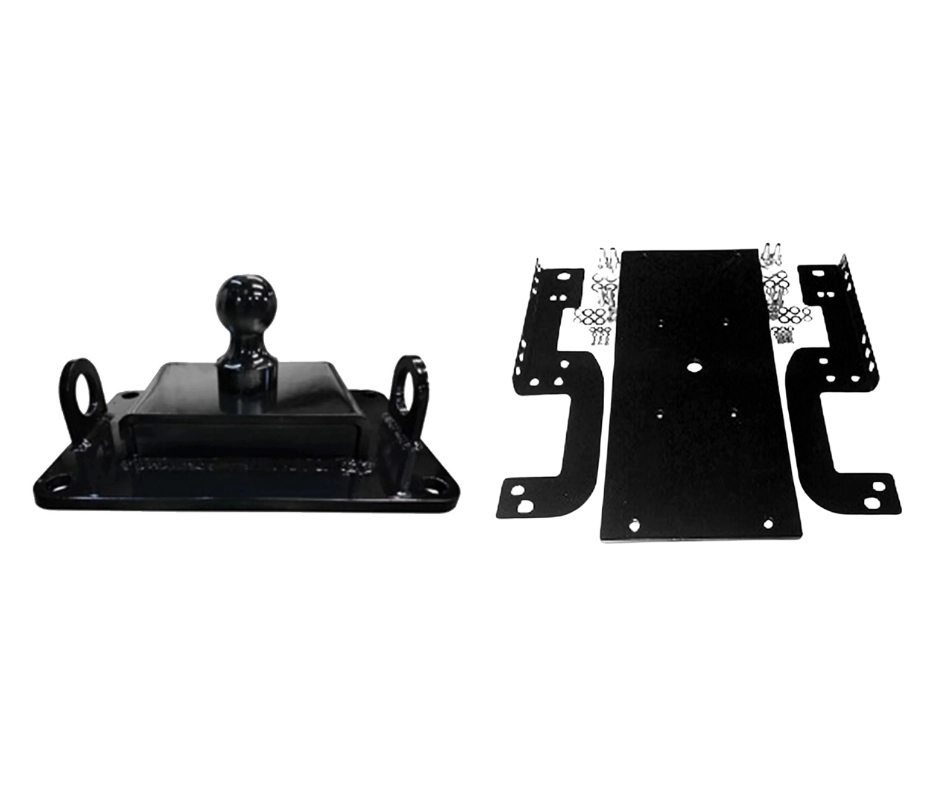
Gooseneck Kit With Bolt On Mounting Plate
Price range: $740.00 through $815.00 -
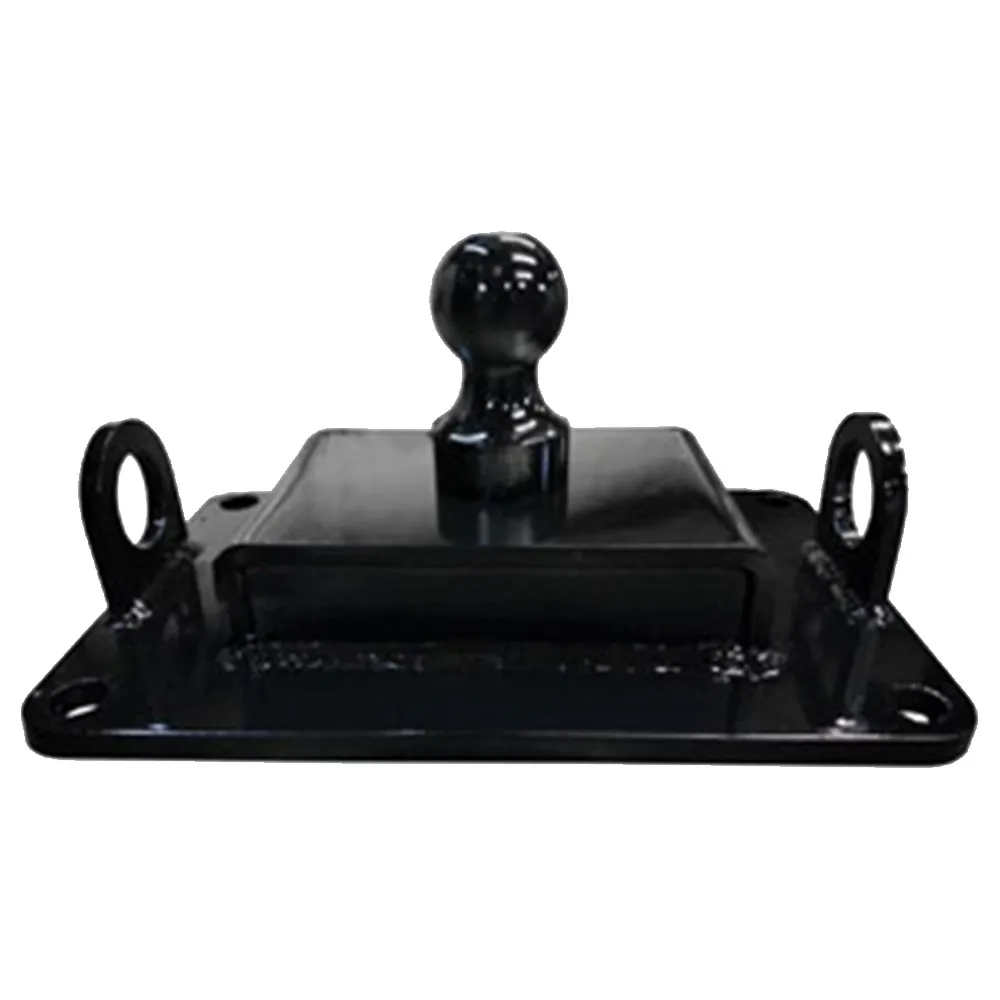
Gooseneck Bolt-on Ball Plate
Price range: $225.00 through $300.00
Safety, Installation and Maintenance Essentials
A high-capacity hitch is only effective when it is properly installed and maintained.
Safety
Start by verifying the rating of every major component in the towing system. That includes the truck, hitch, mounting hardware, kingpin or ball, trailer frame, axles, tires, brakes, and any other load-bearing components. A 50K hitch does not make a lower-rated component capable of handling 50,000 pounds.
Installation
Installation is equally important. Bolt-on systems should be installed using the specified hardware and torque requirements. Weld-on applications should be handled by someone qualified to perform structural welding on towing equipment. For OEM puck systems, make sure the hitch is fully seated and every handle, pin, and locking mechanism is properly engaged before towing.
Maintenance
Regularly inspect the hitch for unusual wear, damage, loose hardware, or problems with the locking jaws. Keeping the moving components properly lubricated and addressing wear before it becomes a failure is particularly important when the hitch is working under heavy loads day after day.
This is where construction quality matters. At HitchCrafter, we manufacture our towing equipment in the USA, including our heavy-duty 5th wheel products, and offer custom fabrication for applications that don't fit an off-the-shelf setup.
Choosing the Right 50K 5th Wheel Hitch for Your Rig
Choosing a 50K 5th wheel hitch shouldn't start with the hitch itself. Start with the trailer.
First, determine the trailer's actual loaded weight. Don't rely solely on an empty or dry weight.
Next, verify the truck's ratings. Check GVWR, GCWR, rear axle rating, payload, tires, and the manufacturer's towing information for your exact configuration.
Then, choose the hitch capacity. If your loaded trailer is comfortably within a 34K setup, a 34K hitch may be the right choice. If your application requires capacity approaching 50,000 pounds, a 50K hitch is the appropriate tier to investigate—provided the truck and every other component are rated for the job.
Choose the mounting style. Decide whether your truck calls for a standalone head, an OEM puck-system kit, or a cab-and-chassis bolt-on configuration.
Select the pivot style based on the trailer. Single pivot is well suited to car hauling, hot shot, and flat loads, while double pivot configurations are intended for applications that benefit from additional articulation.
Finally, confirm the exact truck year, make, model, and chassis configuration before purchasing. HitchCrafter emphasizes vehicle-specific fitment, and removing the bed from a standard pickup does not automatically turn it into a cab-and-chassis truck.
If you're unsure which setup matches your truck, HitchCrafter's online vehicle-selection tool can help narrow down the appropriate hitch configuration. We also offer custom fabrication and installation for specialized towing requirements.
Frequently Asked Questions About 50K 5th Wheel Hitches
Can a 1-ton pickup tow 50,000 lbs?
Generally, you should not assume a 1-ton pickup can tow a 50,000 lb trailer. A 50K trailer can exceed the truck's GVWR, GCWR, axle, payload, braking, or other ratings even if the hitch itself is rated for 50,000 pounds. At this weight, you're typically looking at a purpose-built commercial or cab-and-chassis towing configuration, and the exact truck's published ratings must be verified.
What's the difference between GTW and vertical load on a 50K hitch?
GTW is the hitch's rated gross trailer weight; the total trailer weight the hitch is designed to handle. Vertical or pin load refers to the amount of weight transferred from the trailer through the kingpin into the hitch and truck. They are different specifications, and both need to be considered when designing a towing system.
Do I need a single or double pivot 50K hitch?
It depends on the trailer and application. Single-pivot hitches are generally preferred for car hauling, hot shot, and flat-load applications. Double-pivot hitches allow additional movement between the truck and trailer and are better suited to applications such as campers, horse trailers, and certain equipment trailers. HitchCrafter specifically notes that its double-pivot systems are not intended for car hauling.
Is a 50K hitch overkill for a toy hauler?
It can be. A hitch should be selected based on the actual loaded weight and requirements of the complete towing system. If your toy hauler is well within the capacity of a properly matched 34K hitch, moving up to a 50K hitch may not provide a meaningful benefit. If the trailer and truck combination genuinely requires the additional capacity, however, the 50K tier gives you the appropriate hitch rating to match that application.
Built for the Load. Built for the Long Haul.
When you're towing equipment that weighs tens of thousands of pounds, the hitch isn't a place to cut corners. The right setup starts with matching the trailer, truck, hitch, and mounting system to the actual load.
HitchCrafter's 50K 5th wheel hitch lineup gives professional haulers a heavy-duty option for applications that go beyond the limits of lighter towing equipment. With the 50K Haulin' Head Unit, OEM puck-system kit, and cab-and-chassis bolt-on option, you can choose a configuration built around the way your truck is actually used.
Explore HitchCrafter's 50K 5th wheel hitches or use the Hitch Finder to identify the right setup for your truck's year, make, model, and chassis. HitchCrafter builds its towing equipment in the USA and backs its products with the experience and support professional haulers need when the equipment has to perform.
When the load gets heavy, build the entire towing system to handle it. Contact us today to get started
Contact Us
Let's make something special! Provide us with the vehicle information and a short description for what you're looking for. We'll contact you with some ideas to get started.
"*" indicates required fields